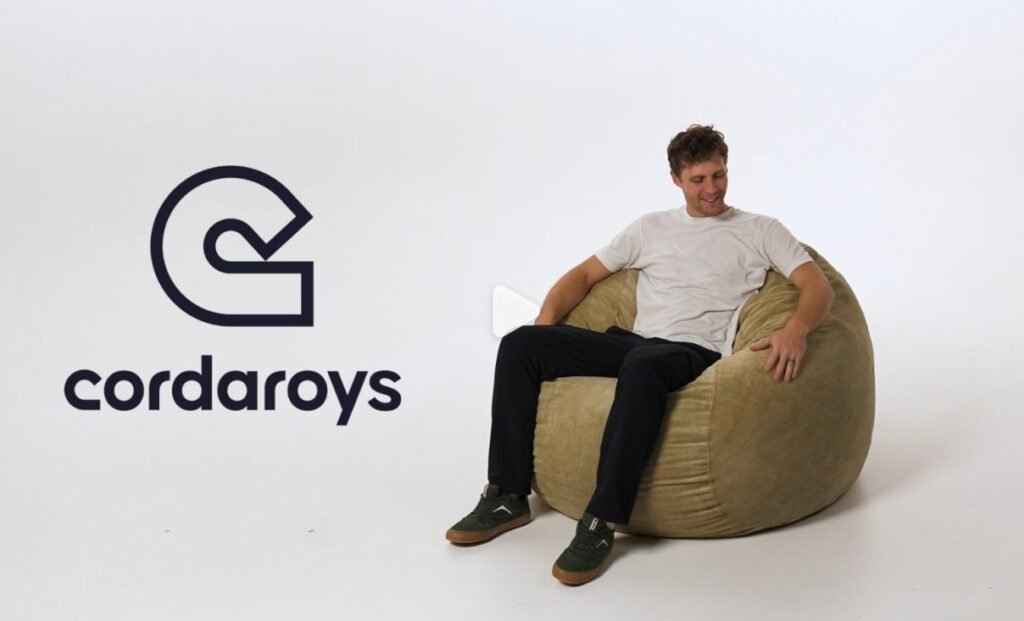
Byron Young spent about fifteen years building a bean bag company before he walked into the Shark Tank. Lori Greiner offered him $200,000 for 58% of it, he said yes, and the company has since racked up $195 million in lifetime sales, according to the show’s own list.
Most “CordaRoy’s net worth” articles stop there. They leave out two things. The sales figures online don’t agree with each other, and Young has said the 58% deal didn’t stay a 58% deal. This post sorts through both.
CordaRoy Shark Tank Overview
| Company | CordaRoy’s (Gainesville, Florida) |
| Founder | Byron Young |
| Founded | 1998 |
| Shark Tank Appearance | Season 4, Episode 19 (Aired March 8, 2013) |
| Ask | $200,000 for 20% Equity ($1,000,000 Valuation) |
| On-Air Deal | $200,000 for 58% Equity (Lori Greiner) |
| Post-Show Twist | Renegotiated (Young retained 100% equity; profit-share model) |
| Pre-Show Sales | ~$1.5 Million gross (per Byron Young) |
| Lifetime Retail Sales | $195 Million (as of 2023, per Sony Pictures Television) |
| Verified Net Worth | Not Publicly Disclosed (Private Company) |
How a Gators game created the product
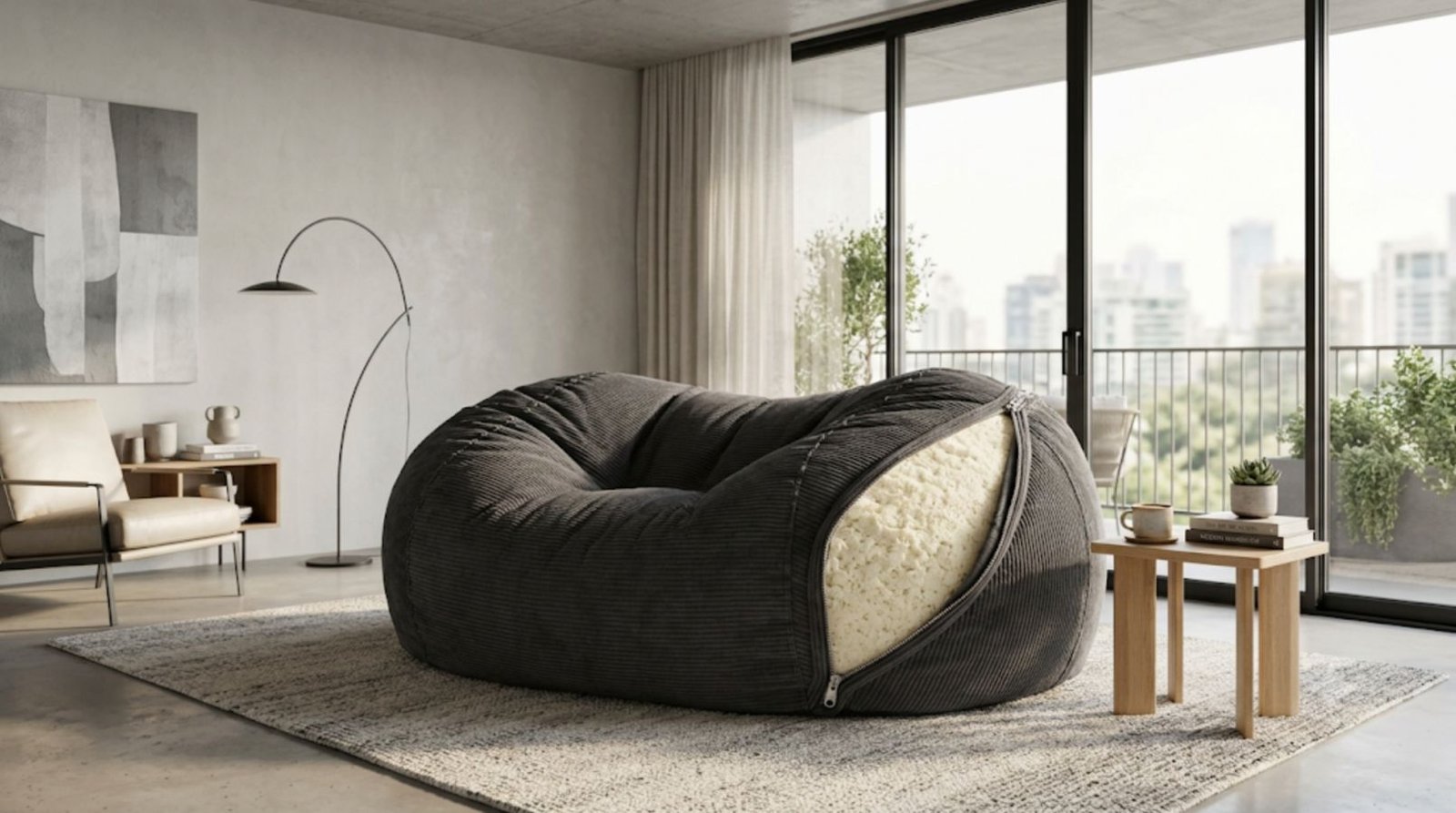
Young grew up in Jacksonville and was working for a furniture company in Mississippi when he started thinking about a product to pitch to his boss, a University of Florida alum. Bean bags came to mind, according to a Mainstreet Daily News profile. He remembered a woman in his hometown who stuffed bean bags with shredded foam, the kind used in mattresses, instead of polystyrene beads that go flat.
He started making them in a Gainesville garage, cutting every piece of fabric himself, until his arm hurt every day. Changing the shape of the filling inside the liner meant he could cut straight lines instead of circles. That detail is how the square foam core that matters later came about.
The bed part was an accident. After a Gators game, two friends crashed at his place and he had nowhere to put them. He told them there was a big square thing in the hallway if they wanted to sleep on it. They slept fine and told him so the next morning. He later called that the most important thing he ever said, and he patented the idea.
Getting on the show
Young didn’t go looking for Shark Tank. His marketing agent pushed him toward a casting call in Orlando, and he showed up late with one green bean bag and a stained shirt. Seeing how far back the line was, he nearly left. Then a woman jumped into the bean bag, so he started demoing it for people waiting. A casting staffer asked how long he’d been in business, what sales looked like and whether he had a patent. He answered, asked to go home, and was moved to the front of the line instead. He says he was the only person from that casting call who made it onto the show.
The deal
Young asked for $200,000 for 20%, which valued the company at $1 million. Greiner offered the same $200,000 for 58%, a valuation of about $345,000. By Shark Tank Blog’s account, he negotiated hard before accepting, and the other Sharks were surprised he’d hand over a majority of a company he’d built over more than a decade.
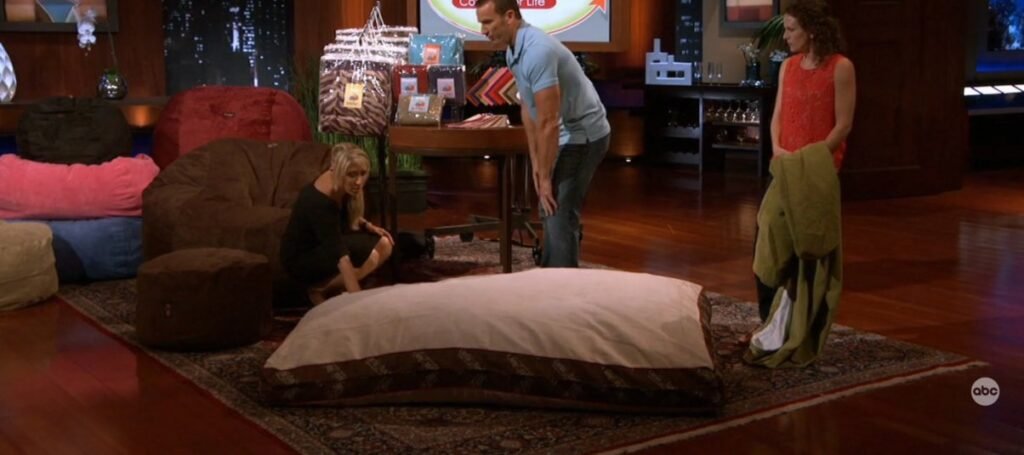
Greiner told him she wanted control because she’d be the one doing the work to raise visibility and sales. Young said he cared more about the company succeeding and becoming a household name than about holding the majority.
The twist: he says the 58% didn’t last
This is the part I’d want any reader to know. Young told Mainstreet Daily News in 2023 that the original deal changed after the show. He left the Tank with Greiner’s number and never called it. She called him, and they met in Chicago, where she brought a check. He turned it down. She asked whether he’d only done the deal to be on TV. He explained he’d decided not to leave the show without her phone number.
They then renegotiated. Young kept 100% ownership of the company and Greiner took a percentage of profits instead. He says they worked together for years and are still friends, but she is no longer involved in running the business.
I only found this in that one interview, and the terms of the new arrangement aren’t public. Nearly every other source, including the show’s own lists, still describes the deal as $200,000 for 58%, because that’s what happened on air. If you’re quoting the stake today, say it was the deal on air and flag that Young describes it as renegotiated.
The company’s own FAQ calls it family-owned and operated by its original founder, which fits his account.
What happened to sales
The first few weeks were chaotic. The website went down for two days from the traffic, per Shark Tank Blog. QVC featured CordaRoy’s for the first time on September 27, 2013, according to a eOnline.
The numbers I could trace:
- Before the show: about $1.5 million in total gross sales, per Young. A few recaps say $1 million.
- April 2014: $3 million in sales when the show aired an update, with a projection of $5 million for the year. By July 2014, Young told Shark Tank Blog that retail sales had reached $7 million.
- September 2019: $48 million lifetime, per Sony Pictures Television via USA Today.
- 2023: $195 million lifetime, per Sony via USA Today, good for 12th on ABC’s list of the show’s biggest earners.
- 2022: “nearly $30 million” in sales for the year, per Young.
The sources contradict each other here. Shark Tank Blog says the company did $10 million in lifetime sales in 2018 and about $5 million a year in 2022. That doesn’t line up with Sony’s $48 million by 2019 or Young’s $30 million for 2022, and it looks like older numbers that never got updated. I’d trust the Sony figures and Young’s own statement over it. Even so, “lifetime sales” in these lists means retail sales, not what the company earned.

Other milestones: products on Amazon and in Costco, and a move in October 2018 to a 20,000-square-foot manufacturing facility in Alachua, Florida. In 2025, the company announced a formal partnership with 100 Thieves, the gaming and lifestyle brand, supplying bean bags to the LA Thieves compound and podcast studio.
So what is CordaRoy’s worth?
Nobody outside the company knows, and the company isn’t talking. It’s private and doesn’t publish financials. Young also said he had another chance to sell last year and turned it down, so there’s no sale price to point to.
Estimates online range widely. Shark Tank Blog puts it between $1.1 million and $10 million, labeled as undisclosed. Other sites repeat a $10 million figure. None of them show how they got there.
What you can reason from:
- Sales aren’t value. $195 million in cumulative retail sales over a decade or so is revenue passing through retailers. It tells you nothing about margin or debt.
- A furniture maker lives on margins. Foam, fabric, warehousing and freight all eat into each sale, and I couldn’t find any figures on how much.
- The scale gap is real. If the company really did nearly $30 million in a single year, as Young says, a $1–10 million valuation looks low, though a valuation depends on profit and I found none. The honest answer is that the ranges online don’t reconcile with the sales figures.
If you see a precise “net worth” for this company, treat it as a guess.
What other founders can take from it
The deal on TV isn’t the deal you end up with. Young went in giving up a majority and came out, by his account, with full ownership and a profit share. Terms can be renegotiated when the relationship works.
Make the call after the show. He left with her number and didn’t use it, and she’s the one who reached out. Whether that was smart or just lucky, it shows how much of a Shark Tank deal happens off camera.
Stay in your lane. Young says the company is really in the shredded foam business, and when it strays too far from what it’s good at, it doesn’t work as well.
FAQs
What is CordaRoy’s net worth in 2026?
There’s no published figure. Estimates online range from about $1 million to $10 million, and they’re unsourced. The company has $195 million in cumulative retail sales as of 2023, but sales aren’t the same as value.
How much did Lori Greiner invest?
$200,000, for 58% on air. Young says they later renegotiated so he kept full ownership and she took a share of profits.
How much has CordaRoy’s sold?
$195 million in lifetime retail sales as of 2023, per Sony Pictures Television. Young says the company made nearly $30 million in 2022 alone.
Is Byron Young still running it?
Yes. The company calls itself family-owned and run by its original founder.
Is Lori Greiner still involved?
By Young’s account, no. He says she’s no longer involved in the business but that they remain friends.
You May Also read:
- Cousins Maine Lobster Net Worth: From One Truck to $1 Billion in Sales
- Drop Stop Net Worth: Where Are They Now After Shark Tank?
- ReadeREST Net Worth: What Rick Hopper’s 65% Deal Looks Like Today