


Two guys from Maine got homesick for lobster in Los Angeles, bought a food truck, and went on Shark Tank two months later with $150,000 in sales and a $1.1 million price tag on their company. Barbara Corcoran gave them $55,000 for 15%. Thirteen years on, the company says it has rung up more than a billion dollars in sales.

That headline number gets repeated a lot, usually next to the words “net worth.” Those are two different things, and the gap between them is most of what’s interesting here. This post goes through how the business started, what happened in the Tank, how big it really is, and what we can and can’t say about what it’s worth.
Two cousins, one craving
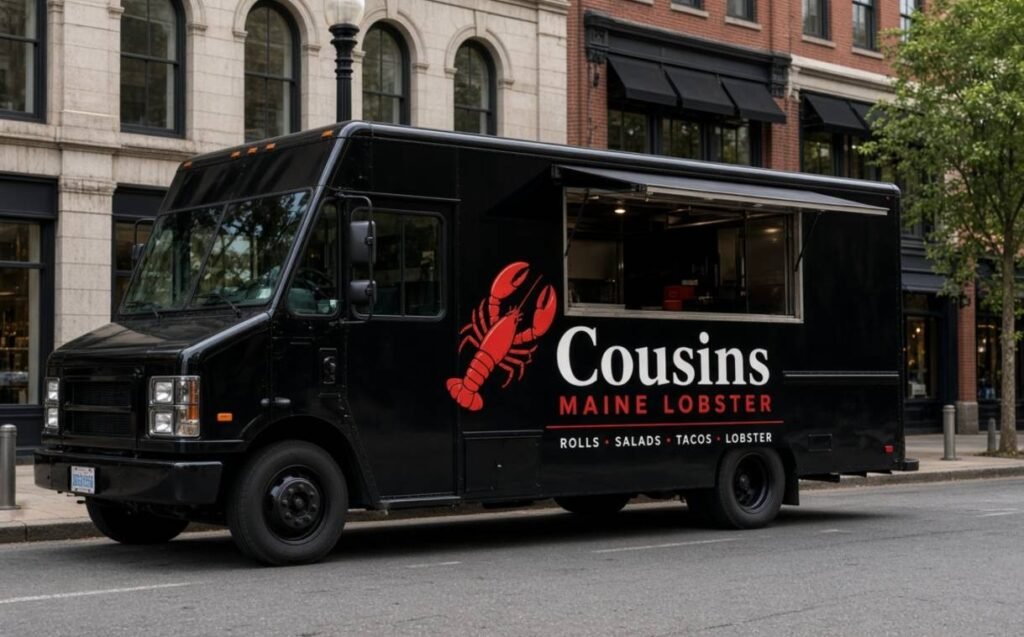
Sabin Lomac and Jim Tselikis grew up in Maine, and they are actual cousins. Lobster was at every family gathering when they were kids. Lomac was living in Los Angeles, Tselikis was visiting, and the idea came out of a night of reminiscing on Sunset Boulevard, as the founders tell it to Tasting Table. Lobster rolls were hard to find on the West Coast, so they decided to sell them.
They spent months on research, mostly on competitors, customers and how to get lobster from Maine to California fresh. The first truck hit the street on April 27, 2012, per the same interview.
They said no to Shark Tank. Twice.
Here’s the part most recaps skip. The cousins didn’t chase the show. A casting scout was in line for a lobster roll the first night the truck opened, and producers invited them to try out. According to Business Insider, they turned it down twice before saying yes.
They did prepare hard once they committed. They watched old episodes, wrote the Sharks’ usual questions on index cards, and practiced their pitch while jogging around LA, trying to rattle each other so nothing in the Tank could.
The pitch
The episode was filmed in July 2012 and aired on October 19, 2012, in Season 4. Several sources, including The Daily Meal, list it as Episode 6.
Their ask was $55,000 for 5%, a $1.1 million valuation for a company that was two months old, had one truck and had done about $150,000 in sales.
The Sharks weren’t buying it. Kevin O’Leary called them “very greedy crustaceans,” and wondered why he couldn’t just hire two guys in flip-flops and call a Maine lobster supplier himself. Tselikis’s answer was that it isn’t that easy to call Maine and get what you need. Mark Cuban told them they were talking nonsense, and Robert Herjavec made an offer of his own before storming out when the cousins asked him about marketing. (Reports differ on his percentage: Tasting Table says 25%, The Daily Meal says 35%.)
That left Corcoran. She asked for 17%, her lucky number. The cousins countered at 12%, and she mouthed a firm no. They settled at 15%.
| Ask | $55,000 for 5% |
| Implied valuation | $1,100,000 |
| Deal | $55,000 for 15% from Barbara Corcoran |
| Implied valuation | about $367,000 |
So they accepted a valuation roughly two-thirds lower than the one they walked in with. Tselikis has said they went after Corcoran on purpose because of her history with food businesses.

What the $55,000 actually did
It didn’t go where the cousins said it would on TV. They told the Sharks the money was for a second truck. They bought that truck with company money instead, and held the $55,000 for two years. Then it paid for the legal work and setup to launch their franchise business, according to Tasting Table.
The franchise idea came from Corcoran. When inquiries poured in from Florida and Texas, she told them the concept was scalable and they should franchise it. Cousins started franchising in 2014. The founders say that without the show they would probably still be a regional business.
The immediate payoff was weaker than you’d expect. The online lobster shipping business was discussed during filming but cut from the episode, so orders didn’t flood in, and Tselikis says they sat on a lot of unsold inventory. What did help was Corcoran getting them on Good Morning America a few weeks later.
How big is it? The numbers, with caveats

- Early on: one truck and about $150,000 in sales at the time of the pitch.
- October 2023: about $585 million in lifetime sales, which put Cousins fifth on ABC’s list of the show’s biggest companies, per Shark Tank Blog. Bombas was first at $1.3 billion.
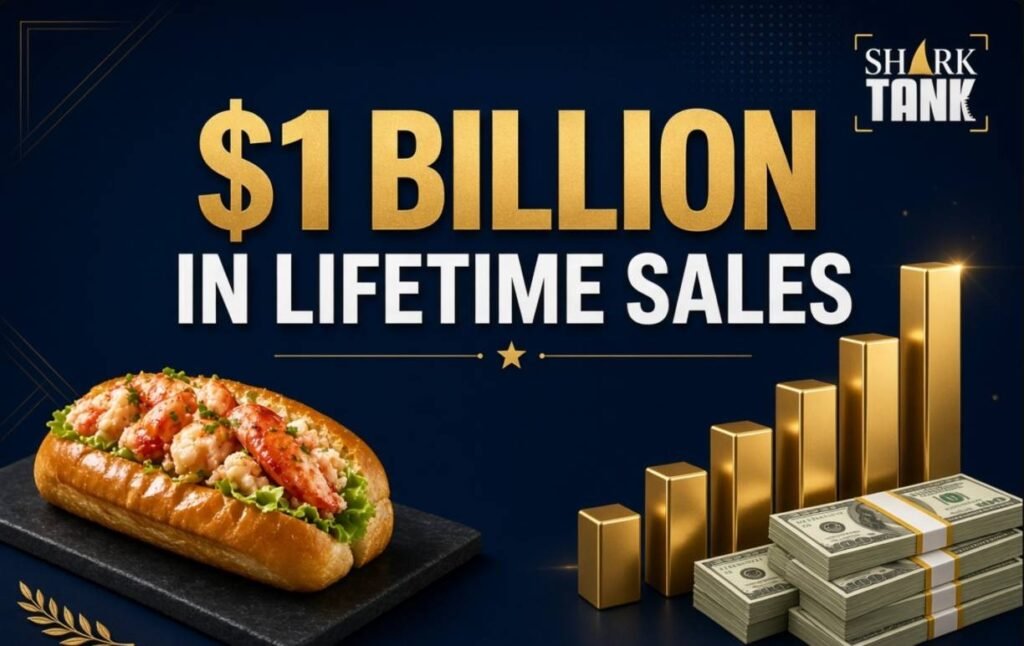
- June 2025: the company announced it had passed $1 billion in systemwide sales since 2012, with more than 85 units in 30 states and a plan to open 30 more in 2026.
Two notes on that billion. It’s the company’s own figure, and “systemwide” means everything sold at every Cousins location, including franchisee-owned ones. That money mostly isn’t Cousins’s revenue. The franchisor gets a cut.
On the unit count, the company said it was targeting 100 locations by mid-2026. I couldn’t find confirmation that it got there. Third-party franchise databases show lower counts, such as 65-plus on 1851 Franchise, probably because they count differently. Treat any unit number as approximate.
According to the company’s 2025 franchise disclosure document, the average truck did about $1.3 million in sales in 2024 (Fast Casual again).
So what is Cousins Maine Lobster worth?
Nobody outside the company can say. It’s private and doesn’t publish financials, and there’s no sale or funding round on record that sets a price.
That hasn’t stopped the internet from guessing. I found “net worth” figures of $50 million, over $100 million, and one page that called the founders “the Litherland siblings” and said Corcoran took 37%. None of them show their work.
Here’s what you can reason from:
- Sales aren’t value. $1 billion in sales over 13 years says how much food was sold. It says nothing about profit.
- A franchisor earns a slice. The 2026 franchise disclosure document lists a royalty of the greater of 6% of gross sales or $3,500 a month (via 1851 Franchise). As a rough order of magnitude, 6% of $1 billion is $60 million of royalties over the company’s whole life, and the real number is lower because company-owned units keep all their sales while some older agreements and discounts differ. That’s before any costs.
- There’s also product. Franchisees buy key items through an affiliated supplier rather than shopping the open market, according to 1851 Franchise. Whether that supply business is a meaningful profit center isn’t public.
So the honest answer is that it’s a real, growing, multi-million-dollar business, and any precise valuation is a guess.
Barbara Corcoran’s cut
Corcoran paid $55,000 for 15%. She’s called Cousins the one she has the most fun with, and said, per CheatSheet, that they’ve “made me a lot of money.”
She hasn’t said how much. Without a valuation or sale, any dollar figure for her stake is made up. If the stake hasn’t been diluted, which I couldn’t confirm either way, it’s 15% of something that has grown a very long way from $367,000.
What it costs to open one
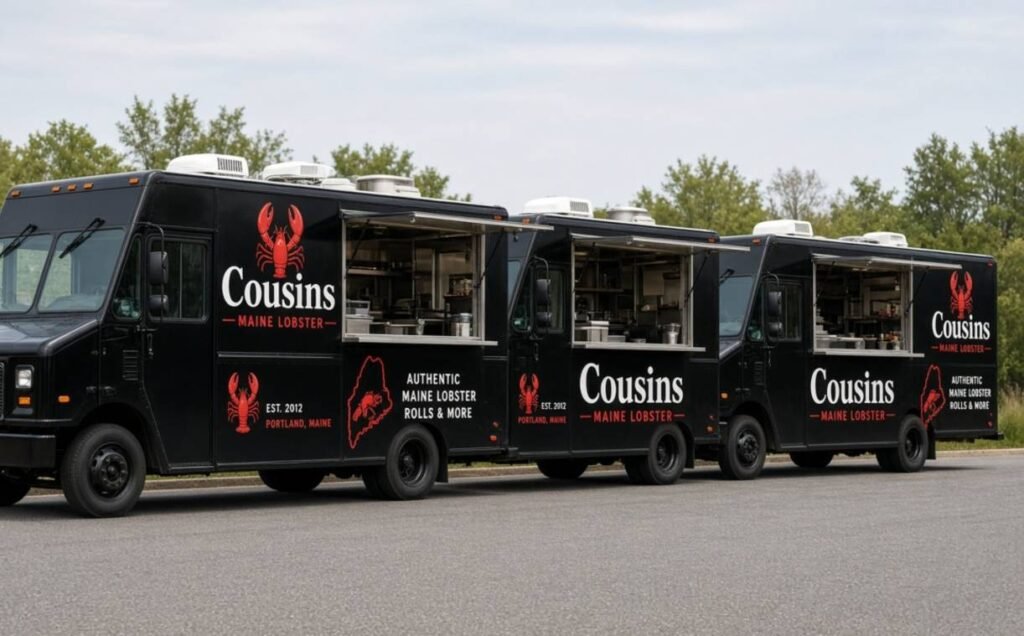
The 2026 franchise disclosure document puts a storefront restaurant at $266,600 to $965,800 all-in, with the royalty above (1851 Franchise). Food trucks cost less. A 2024 estimate on Franzy has trucks at roughly $194,000 to $645,000. These come from third-party summaries, so read the actual disclosure document before you plan around them. The company says a truck can launch within three to six months.

What other founders can take from it
- The $55K sat unused for two years — that’s a specific, counterintuitive money management lesson
- They turned down the show twice — that’s a lesson about timing and readiness, not about Shark Tank at all
- Herjavec stormed out — the cousins held their ground on a question they didn’t want to answer, which is different from “pick your investor on purpose”
FAQs
Who owns Cousins Maine Lobster today?
The founders started it and Corcoran took 15% in 2012. I found no public announcement of any change, but the company is private, so later share changes wouldn’t necessarily be reported.
How many locations does it have?
The company claimed more than 85 units in 30 states in mid-2025 and aimed for 100 by mid-2026. I couldn’t confirm it reached 100, and franchise databases show lower counts.
What was Barbara Corcoran’s stake worth?
There’s no public figure. She put in $55,000 for 15%, and the company has never published a valuation.
How much does a franchise cost?
Per the 2026 franchise disclosure document, a storefront runs about $266,600 to $965,800, and trucks cost less. Always check the document itself.
Is the $1 billion figure real?
It’s the company’s own announced total of systemwide sales since 2012. It’s revenue across every location, not profit and not the company’s value.