


Bug Bite Thing has no publicly disclosed net worth or valuation. The privately held company, based in Port St. Lucie, Florida, doesn’t publicly disclose audited financial statements or a cap table, so any specific figure you see online is an independent estimate, not an official company valuation. What the record does show is a specific Shark Tank deal, a steady stream of company-announced retail milestones, and one acquisition. This post lays out each of those, says who reported it, and marks the numbers that only appear on secondary sites.
What’s actually documented
- The deal: On October 20, 2019, founders Kelley Higney and her mother, Ellen McAlister, asked for $150,000 for 10% and accepted Lori Greiner’s Golden Ticket offer of exactly that. It was Season 11, Episode 4, which aired on ABC on October 20, 2019.
- Retail: The company announced 30,000 major retail locations and 34 countries in an August 2022 press release.
- Growth ranking: It placed No. 1,775 on the 2023 Inc. 5000, which ranks companies by revenue growth from 2019 to 2022, not by size.
- Acquisition: In June 2023, it acquired TickEase, Inc., a tick-removal tweezer company.
Bug Bite Thing at a Glance
| Company | Bug Bite Thing, privately held, Port St. Lucie, Florida |
| Founders | Kelley Higney (founder and CEO) and Ellen McAlister |
| Product | A reusable suction tool marketed to relieve itching, stinging and swelling after insect bites and stings. The single tool is currently listed at $11.99 on the company’s website. |
| Shark Tank | Season 11, Episode 4, aired October 20, 2019 |
| Ask | $150,000 for 10% (implied $1.5 million post-money valuation) |
| Deal | $150,000 for 10% from Lori Greiner (her Golden Ticket) |
| Pre-show sales | Approximately $500,000 in sales in the previous year; $800,000 in the first five months of 2019, with a $2 million full-year projection. |
| Retail footprint | 30,000 locations and 34 countries (company claim, 2022 to 2023) |
| Acquisition | TickEase, Inc., June 2023 |
| Valuation | Not disclosed |
Bug Bite Thing Shark Tank Pitch
Kelley Higney’s story began when she moved with her family from California to Florida in 2013. Her six-month-old daughter suffered severe reactions to mosquito bites, and the usual over-the-counter remedies weren’t providing the relief the family needed.
In 2015, Higney began researching how other countries dealt with insect bites and discovered an existing suction tool. She tracked down its owner and secured exclusive U.S. distribution rights. Rather than inventing the suction mechanism herself, she focused on developing a recognizable brand and building a business around the product.

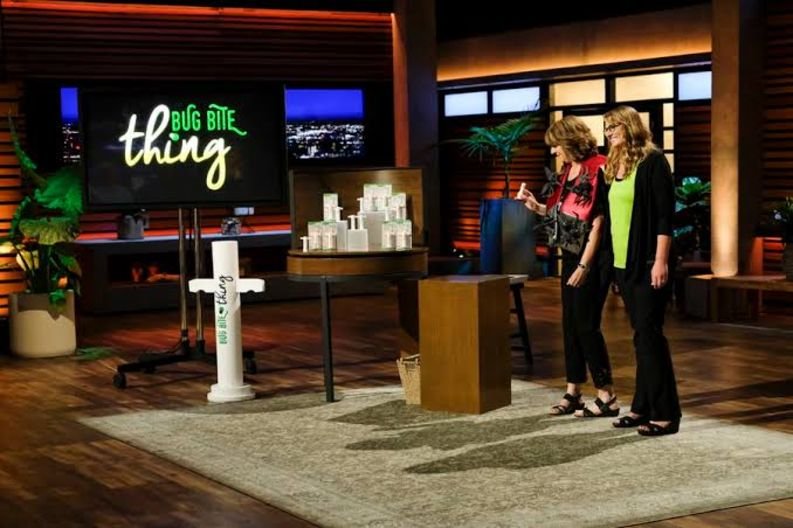
In 2016, she created the Bug Bite Thing brand and started selling the tool at farmers’ markets and school events. Her early approach was simple: demonstrate the product, explain how it worked, and build demand through direct customer interaction.
One distinction matters: the claim that the tool removes insect saliva or venom comes from the manufacturer; it is not an established clinical finding. A 2022 review published in Frontiers in Immunology notes that suction tools are designed to remove mosquito saliva, but that no randomized, blinded clinical trials had evaluated their effectiveness.
This does not establish that the product is ineffective. It means its advertised mechanism should be attributed to the manufacturer rather than presented as proven medical evidence. The review discusses suction devices as a category, not Bug Bite Thing specifically, and its findings relate to mosquito bites rather than every type of insect bite or sting.
The sales figures they shared were about $500,000 in the first year and $800,000 in the first five months of 2019, with a $2 million projection for the year. The founders also reported margins of approximately 80%, which helped make the relatively inexpensive product attractive to the Sharks. During the pitch, the founders acknowledged that the original suction mechanism was not patented—meaning their defensibility rested on exclusive U.S. distribution rights with the Danish manufacturer and brand momentum—yet Kelley Higney later confirmed that all five Sharks made offers.
The offers, as recapped by Market Realist and the Town-Crier:
- Rohan Oza: $150,000 for 10%.
- Barbara Corcoran: $200,000 for 10%.
- Kevin O’Leary: $150,000 for 6%, plus $1 for every unit sold.
- Lori Greiner: $150,000 for 10%, as her Golden Ticket.
Greiner said she hated bugs and bites and gave exactly what they’d asked for. Lori Greiner’s affinity for low-cost, problem-solving consumer gadgets—a portfolio strategy seen in her investment in Safe Grabs—made Bug Bite Thing an immediate match for her Golden Ticket. Corcoran protested that she’d offered more, and Mark Cuban and Corcoran were discussing a joint offer, but Higney and McAlister took the ticket. It was a solo deal.
One correction to information you may see elsewhere: Emma Grede did not appear in this episode and was not involved in the Bug Bite Thing deal. The guest Shark was Rohan Oza. Grede made her guest-Shark debut in Season 13, Episode 1, on October 8, 2021—nearly two years after Bug Bite Thing’s appearance. See ABC’s announcement of her debut.
How Bug Bite Thing Expanded Into 30,000 Retail Locations
The Shark Tank appearance was an important turning point, but retail distribution played an equally important role in Bug Bite Thing’s growth.
In its April 2021 Shark Tank update, the company reported expansion into more than 25,000 retail locations across 25 countries. By August 2022, it reported availability in 30,000 major retail locations and 34 countries, with new partnerships including Meijer, Rite Aid and Walgreens.
These company-reported milestones illustrate the brand’s transition from online and direct sales into large-scale retail distribution.

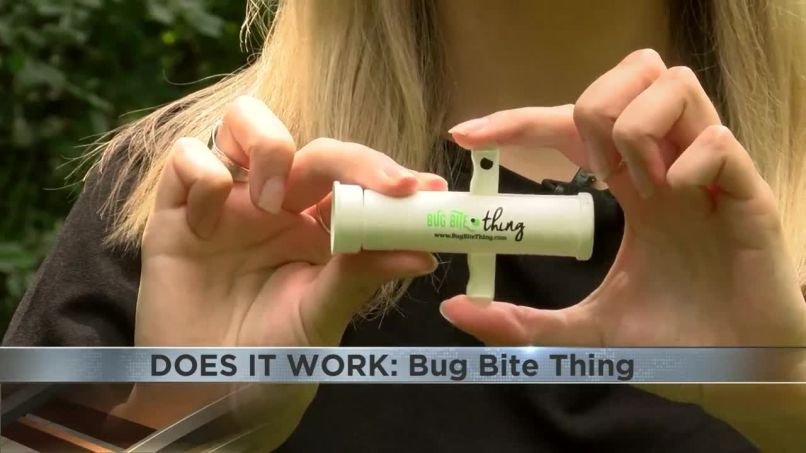
Retail and Business Growth: From 25,000 to 30,000 Locations
I’ve separated these by date and source so the milestones don’t blur together:
| Date | Claim | Source |
|---|---|---|
| April 2021 | Back on Shark Tank for an update; 25,000 retail locations in 25 countries | The company’s own page |
| September 21, 2021 | New retail partners including Ace Hardware, JOANN and Lowe’s; 2021 revenue projected to exceed $15 million | Company press release |
| August 9, 2022 | 30,000 major retail locations and 34 countries; new partners Meijer, Rite Aid and Walgreens | Company press release |
| June 2023 | Company forecast of 58% revenue growth in 2024, tied to the tick tool | Company press release |
| July 2024 | $32 million in lifetime sales | Secondary report only |
The revenue numbers are the company’s own claims. The $15 million figure was a projection, not a result. The $32 million lifetime figure appears on fan sites, and I couldn’t trace it to a company statement.
TickEase Acquisition
The June 28, 2023 announcement said Bug Bite Thing had bought TickEase, which makes patented, fine-tipped tweezers for removing ticks from people and pets. The company said it “meets” CDC guidelines for tick removal. That means the design follows what the CDC tells people to do, which is to grab the tick close to the skin with fine-tipped tweezers and pull steadily. It isn’t a CDC approval or endorsement.
The release gave no price. The seller’s side comes from a They Got Acquired interview with founder Dan Wolff. He said TickEase made about $500,000 in 2022, was in about 300 stores, and had raised roughly $400,000 in total. About half its sales were on Amazon. As part of the deal, Bug Bite Thing gets a five-year right of first refusal on his future ideas. They Got Acquired categorizes the transaction as a six-figure sale. However, Bug Bite Thing did not publicly disclose the purchase price, so this should be treated as the publication’s reported classification rather than a confirmed transaction amount. Wolff explained that selling the business helped him pay off investors and some outstanding debt.
How they financed the growth
Big-box retailers pay slowly. According to an eCapital case study of Bug Bite Thing’s financing arrangement, the company needed capital to order and package large quantities of inventory months in advance. Managing working-capital cash flow during aggressive expansion is a major bottleneck for scaling consumer brands—a financial reality also experienced by ventures like NuMilk—and Bug Bite Thing’s partnerships with retailers such as Rite Aid and The Home Depot created payment terms that contributed to a working-capital gap of up to 180 days.
What Is Bug Bite Thing Worth in 2026?
Bug Bite Thing has not publicly disclosed its current enterprise valuation or net worth. Third-party websites publish estimates that vary considerably, but their methods and underlying financial assumptions are not consistently disclosed.
A meaningful valuation would require current revenue, profitability, outstanding debt, cash flow, and an updated capitalization table. None of this information has been made publicly available in sufficient detail to calculate a reliable company valuation.
The most accurate conclusion is that Bug Bite Thing has established a substantial retail presence and expanded its product portfolio, but its actual financial worth remains private.
Lori Greiner’s stake
The on-air terms were $150,000 for 10%. That’s all that’s been disclosed. I found nothing on whether her stake has changed, what she’s been paid, or what it’s worth now.
Bug Bite Thing FAQs
What is Bug Bite Thing’s net worth?
It isn’t public. The company is private and hasn’t disclosed a valuation. Third-party estimates vary and aren’t based on disclosed financials.
Who invested in Bug Bite Thing?
Lori Greiner, for $150,000 and 10%, on Season 11, Episode 4 of Shark Tank.
Who owns Bug Bite Thing today?
Kelley Higney is the founder and CEO, and Ellen McAlister is the president. Lori Greiner took 10% on air. The company hasn’t disclosed its current cap table, so her present stake and the founders’ exact ownership can’t be confirmed.
How many stores sell Bug Bite Thing?
The company reported more than 30,000 major retail locations and availability in 34 countries in August 2022. It did not specify that all 30,000 locations were in the United States.
Did Bug Bite Thing buy TickEase?
Yes, in June 2023. The company didn’t disclose the price, and the seller has described it as six figures.
Is TickEase CDC-approved?
No. The company says it meets CDC guidelines for tick removal, which isn’t the same as CDC approval.
Did Emma Grede invest in Bug Bite Thing on Shark Tank?
No. Bug Bite Thing appeared in Season 11, Episode 4, on October 20, 2019. Emma Grede made her guest-Shark debut in Season 13, Episode 1, on October 8, 2021. Lori Greiner secured the Bug Bite Thing deal with her $150,000 Golden Ticket offer for 10% equity.
Final Thoughts: What Bug Bite Thing’s Growth Story Reveals
Bug Bite Thing demonstrates how a relatively inexpensive product can develop into a recognizable consumer brand through the right distribution strategy and retail partnerships—much like how Groove Life converted everyday utility accessories into mass-market category leaders.
Kelley Higney identified an existing product with commercial potential, secured exclusive distribution rights, and built a recognizable brand around it. Lori Greiner’s Golden Ticket helped the founders gain national exposure, while subsequent partnerships expanded distribution to tens of thousands of retail locations.
The June 2023 acquisition of TickEase also showed that the company was interested in growing beyond its original insect-bite relief product.
However, impressive retail distribution, reported sales figures, and product acquisitions do not establish a company’s net worth.
Bug Bite Thing has not publicly disclosed its current valuation or ownership breakdown. Its growth story is documented far better than its financial worth, and that distinction is important when evaluating the business today.